The President Ram Nath Kovind Committee Report on ‘One-Nation-One-Vote’ may have added one more issue to be addressed while tackling Electoral Reforms. Then, there are the continuing questions about the current crop of poll reforms introduced by the Election Commission 30 years back. In any case, any talk of electoral reform leads to a dead end. It is a constitutional quagmire, and there are a lot of strings attached.
There are some successful reforms initiated by ADR, but in many other areas we have failed.
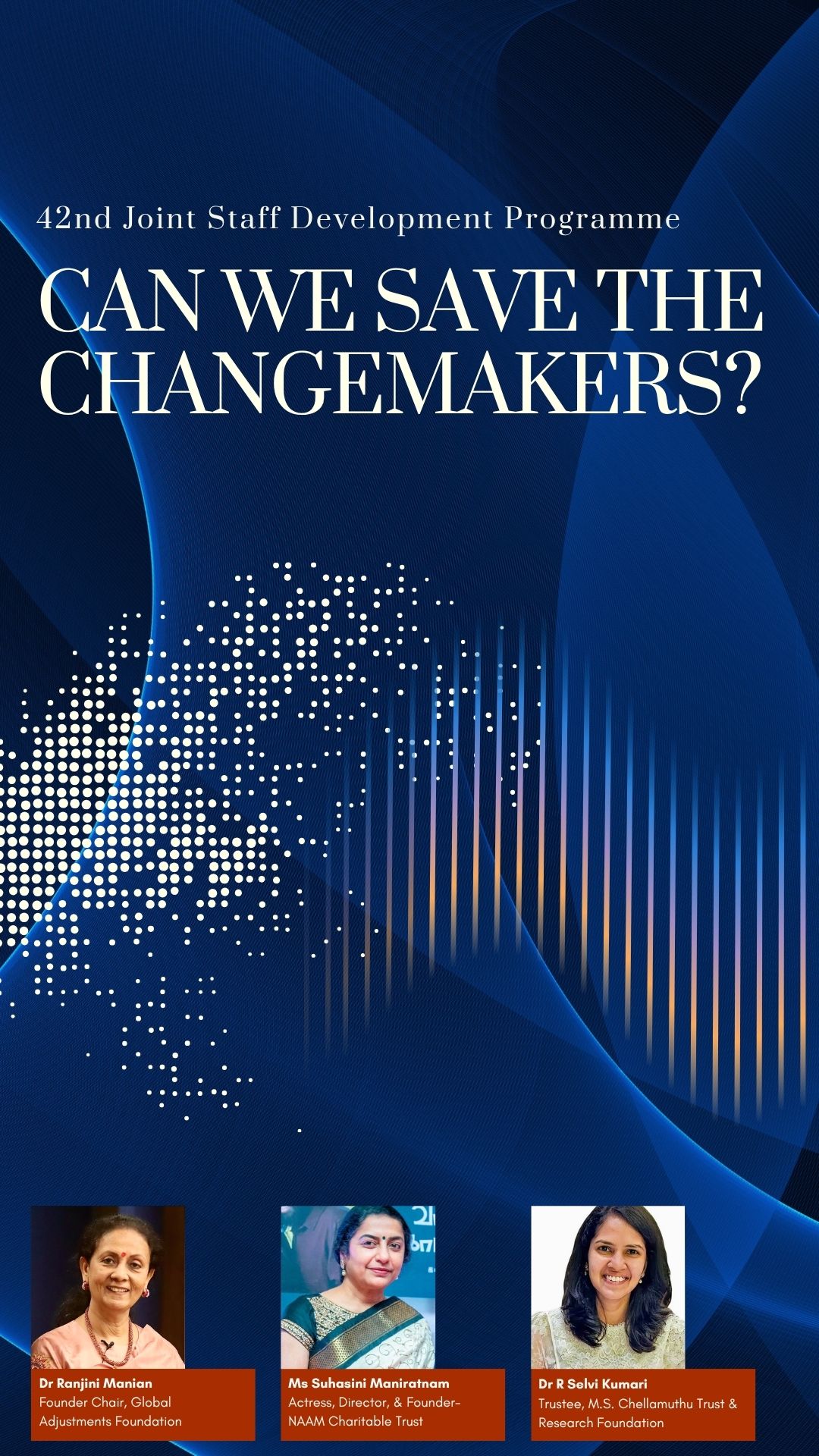
Prof Trilochan Sastry
Former Dean, Indian Institute of Management, Bangalore & Chairman of the Association for Democratic Reforms (ADR)

Why do we need electoral reforms and who will bring in these reforms? These are two questions that I will try to address from a citizen’s perspective.
Coming to the operational details, overuse of money vitiates democracy. Those who spend crores and crores to win elections are not doing it for public service. Once the election is won, their first priority is to recover that investment. So there has to be some regulation against the overuse of money. There is an official limit of Rs 95 lakhs now for the MP constituency. But in reality, we have all kinds of figures from 2 crores to 20 crores.
Fake News and Hate Speech
In voter enrolment, we keep on hearing problems all over the country about names being struck or names not being added and various tricks being used to prevent people from voting including strong arm tactics. In the last four or five years, there is a misuse of social media to spread fake news. The social media giants like WhatsApp say that India tops the world in hate speech. This goes up considerably in elections. India, according to various estimates, spent more money in the 2019 Lok Sabha elections than the US presidential elections. American economy is huge compared to India. This is not what the election commission spends but what the candidates and political parties spend. World over, the concern about capture of government by big money continues. We must bring transparency in election funding and limit the amount that an individual or a corporate can donate to a political party.
The Problem of Migrant Workers
There is a peculiar Indian issue, which is the rise in members of parliament and MLAs with criminal cases and their engaging in identity-based politics, which the political leaders use during elections to divide the country. The number of migrant workers all over India has reached 30 to 45 crores. Most of them are not going back to vote. This is another phenomenon which is increasing election after election. We have not yet found a solution in dealing with this huge number. The number of migrant workers in India is more than the population of the US and practically every country in the world except China and Brazil.
Electoral Bonds: An ADR Appeal
Not only in India, but around the world, there is a need for transparency in funding. We need educated and engaged voters. Our Association for Democratic Reforms was set up for electoral reforms. Are the reforms bane or boon? My answer: it is a boon. Most recently, electoral bonds was struck down as unconstitutional by the Supreme Court, based on our (ADR’s) petition for electoral reforms. Not only the Finance Act, but four subsidiary acts / amendments were struck down. The company’s act amendment, the RBI amendment, the amendment to the representation of people’s act and the amendment to the Income Tax Act were struck down. This is just an example of a citizen or civil society-initiated reform and it has been the most dramatic verdict in recent times.
Back in 2002 and 2003, we had filed a petition in the Supreme Court pleading that candidates must mandatorily declare their financial and criminal records. After a long story, the Supreme Court upheld it. Later, this was extended to the local bodies. Some people may not know that the Chief Election Commissioner presides over the elections of only the Lok Sabha, Rajya Sabha and the State Assemblies. The local body elections are held by a separate constitutional body called the state election board.
Tamilnadu Leads in a Wrong Race
A bill on electoral expenses was introduced and the election commission further asked candidates to file expenses every three days during the campaign. Bribing of voters, giving gifts and all sorts of things are taking place and there is a close competition between the southern states and perhaps Tamilnadu wins hands down in terms of the money being distributed to voters, which is against the Representation of People’s Act and it is a corrupt practice.
In 2008, we obtained a landmark ruling that the income tax returns of political parties should be made public. Each company has to have an internal auditor, an external auditor, follow the best accounting practices and make their balance sheets and audited statements publicly available. The political parties, on the other hand, were not even auditing their statements. Their accounts were in a mess. We asked the CIC that it should be made public.
Back To Square One
As a result of all our work, we saw that the criminalization of politics came down, but now we are back to square one or even worse. In most countries, the issue of conflict of interest has been flagged. But in India, a Member of Parliament can be on various committees and even enact laws or vote on laws even where there is a conflict of interest.
There is a huge debate about foreign funding of NGOs. We won a case in the Delhi High Court claiming that both the Congress and the BJP were guilty of foreign funding. We promptly appealed in the Supreme Court, and the Supreme Court has not heard it for so many years. In June 2013, the central information commission declared that the six national parties are public authorities. The political parties refused to comply with that order. We filed a petition in the Supreme Court and it is still hanging fire.
The Supreme Court said in 2013, that sitting MPs and MLAs are barred from holding office on being convicted in a court of law. That means they have to immediately resign if they have been convicted. The Court also said that unless the conviction is set aside, they are barred from holding public office as per the representation of people’s act.
The famous case of NOTA was laid down by the Supreme Court (None of the Above). The Supreme Court also empowered the election commission to disqualify candidates for false election expenditure statements. These are all strong steps. The Supreme Court asked candidates to declare sources of income of spouse and dependents. Our analysis shows that the income of repeat winners or repeat candidates go up by several fold. We wanted to know how it is happening. But the Income Tax department refuses to take any action on investigating the sources of increase of income.
The Composition of EC
Just last year, we won a major case which the government has refused to honour. We had petitioned the Supreme Court that the election commissioners should be appointed by a multi-person body. We had given various suggestions. But the Supreme Court held that the Prime Minister, the Chief Justice of India, and the leader of the largest opposition party would appoint the election commissioners. But the government introduced a bill dropping the Chief Justice of India and in that place, putting up a Union Cabinet Minister. We’ve gone back to the court, but it has not yet come up for hearing. It is blatantly against the directions of the Supreme Court.
Though there are some successful reforms initiated by ADR, in many other areas we have failed. If you look at the Lok Sabha, over three elections held in 2009, 2014 and 2019, the percentage of people with serious criminal cases has gone up from 14% to 21% to 29%. Even in the Union Cabinet of India, the most powerful political body in the country, people with serious criminal cases in 2019 was 29%. Then how can we expect good governance? It’s all dependent on one charismatic leader or the other. We have failed to address this adequately. ADR and other organisations too have gone to the court but the court has refused to budge and give any directions on this.
We have a British type first-past-the-post parliamentary system with indirect election of CM and the Prime Minister. In the US, they have the presidential system. In Europe, they have the proportional representation system. In France, they have a system where they have to get at least 50% of the votes cast to be a people’s representative.
In India, there’s no lack of wisdom; there is no lack of study. Most eminent people have gone into the questions of what kind of system we need and they have given their recommendations. Most people agree that the current system is not working well and we may have to change it. I think it’s only public pressure that may help us.
The kind of proliferation of political parties is certainly not a healthy situation.
Mr T S Krishnamurthy
Former Chief Election Commissioner of India

In my opinion, electoral reforms are absolutely necessary. Political parties never touch the need for electoral reforms—none of them, because they are quite happy with the status quo. In this parliamentary election, at least one party has expressed the need for simultaneous elections. There are plenty of reforms initiated by various organizations including the Election Commission and the Law Commission. I’ll touch upon some important ones.
A Law unto Themselves?
One of the things urgently required is the regulation of political parties by a separate law. In many countries, particularly Commonwealth countries, they have a separate law governing the functioning of the political parties. We do not have the law. We have a lot of regulation of companies and partnerships. But we do not have the law to regulate the functioning of political parties. Almost 2000 political parties are registered but hardly 100 of them contest elections. The rest work as lobby centers and work for their own objectives, maybe for a particular section of the community or a particular economic group and so on. But we must question the need for so many political parties. The election commission brought about certain restrictions on the registration of political parties, but the Supreme Court struck it down saying that the right to form an association is a fundamental right. But even then, I feel there is a need for certain restrictions and regulations. The kind of proliferation of political parties is certainly not a healthy situation. You can form Associations, but should they be political parties and yet, not contest elections?
Need for Inner Party Democracy
The functioning of political parties themselves need to be regulated. For example, there are certain parties where the posts are almost monopolised by certain persons. There is no rotation of posts; there is no restriction of period for which a post has to be held. There was an attempt made by one of the political parties to make a lifetime president to their particular party and the election commission banned that and put in certain restrictions. The Supreme Court upheld the decision of the election commission. The need for rotation of posts of the internal party organization needs to be addressed.
When the electoral bonds scheme was introduced, I took a public stand and said that it is not transparent and it is not desirable. The Supreme Court has now upheld that electoral bonds scheme is unconstitutional. One of the most important requirements of public governance is that political parties, whether they are in power or out of power, have to be transparent and they must have efficient governance. But unfortunately, in most of the political parties -not only in India, but in many Asian and African countries, there is no transparency at all.
Corporate & Political Nexus
The Institute of Democracy and Electoral Law Systems in Sweden, has made a study of the functioning of the political parties and they brought up a publication in Sweden. It’s very unfortunate that there is a nexus between corporate and political parties in many countries, and the system of funding the election is certainly not an ideal one. I have suggested that there should be a public funding of elections and political parties should not be allowed to spend money on elections. There are countries where political parties are not allowed to accept donations, for example in Canada. Only the members of the party and their family members can contribute to the funding of the elections. We can make corporates and individuals to contribute to a national election fund, which could be given 100% tax exemption. Over a period of time, the fund has to be built. With the consensus of all political parties, the allocation of funds could be done. I know there are practical difficulties but we have to overcome that, for the simple reason that political parties should be freed from the clutches of corporate donations. It applies to all political bodies. I’m not singling out any particular political party and it is desirable to do it quickly. Otherwise, public governance is bound to be affected in a substantial form.
Need for Accounting
Regarding the financial management of political parties, like companies, the parties should also be asked to disclose their accounts, if not once in a quarter, at least twice a year, so that the public know how the funds are received and how they are deployed. The Association for Democratic Reforms went to the Central Information Commission to make the political parties to disclose this information. In spite of the ruling of the CIC, none of the political parties has complied with this and the matter has been taken up to the judiciary. It is necessary that there should be a proper disclosure of accounts by the political parties. The candidates’ selection is an area where we need a lot of discussion. At the moment, it is being done on the basis of a committee in each political party. The main consideration is whether the person will be able to provide funds and whether he/she is a dominant person in that constituency. The dominant factor can be caste, religion, or language.
The main reason for this kind of selection is the fact that we follow the first- past-the-post-system where a person can win, even by a difference of one vote. My suggestion is that we should insist on 50% plus but if there is any difficulty in implementing it, at least 33.33%of the votes polled must be the threshold for declaring a candidate as a winner. Otherwise, we will only encourage small parties to try and dominate. Sometimes, small parties get even cabinet positions, even though they have won a fraction of the votes polled. It is necessary for us to bring the change otherwise, it is not only a non-representative government, but also, it gives room for hatred, violence, inter party rivalry and so on. In fact, I would also go to the extent of saying that at least for the parliamentary elections, independents should not be allowed to contest. They should be brought under the discipline of a political party. Particularly in the state governments, the independents play a crucial role in unsettling a stable government.
Unholy Alliances
With the system of government that we have, the majority should be able to form the government. Different parties join together and form an alliance, but there is no coalition law, but only a coalition dharma. But even that is very often violated. The alliances need to be given a statutory shape. For example, if an alliance comes to power, it will be made very clear that a person leaving that alliance will be disqualified for a period of five years or three years. There is a strong necessity to regulate the formation of government through alliances.
We have the anti-defection law introduced in 1985. But then the speaker who is the arbiter is often a member of a ruling party. Unlike the western democracies, the speakers do not function in a neutral manner. As a result of this, the anti-defection law has become totally ineffective. I suggest that if persons leave a particular party, they should not be allowed to hold any post in the government, even if that alliance comes to power. They should be disqualified to contest elections for five years.
Are Freebies Really Free?
Then the other important issue is providing freebies to the voters. The matter went up to the Supreme Court, which unfortunately, did not give a firm decision. All they said was, the election commission may draft a suitable guideline in the matter of providing freebies to the voters. My view is giving freebie is nothing but corruption. The parties must indicate in their manifesto how they will fund the freebies- if they will resort to additional taxation or if they will give up some of the existing schemes.
We need to bring in changes in the model code of conduct also. The election commission should have some statutory power to disqualify candidates or even political parties, if there are serious violations of model code of conduct.
EVMs Take the Blame
The EVMs (electronic voting machines) cannot be misused or manipulated. Unfortunately, political parties who lose their elections find it easy to blame that the EVMs have been manipulated. We can seek improvements in the electronic voting system though. I can confidently say that there are enough safeguards in the machine and it cannot be misused and manipulated. When the parties win elections, they do not talk about the electronic voting machine. Regarding simultaneous elections, the legal and constitutional issues need to be sorted out. But as an administrator, I can say that simultaneous election is good for the country.
We need people of integrity more than those having administrative qualities.
Dr M R Venkatesh
Advocate, Supreme Court of India

I think in the last 30 years, if there is one institution, which has been a pride of India, it has been the Election Commission of India. We have to salute the silent warriors who have been carrying on this exercise. There are more than a million electoral booths.
Mr Krishnamurthy said that people who walk out of an alliance must be penalised. I think people who walk into an alliance must do so, at least three months prior to the election date. The tentative date must be intimated by the election commission. We must ask parties when they come out with election manifestos, the cost of the scheme, the impact on the exchequer and how they are going to fund it. This is a very legitimate expectation that we must bring in. I cannot simply say that I’m going to give Rs 10,000 per head to everyone.
There was a Federal Reserve chairman called Ben Bernanke. When he was asked if America were to meet with a recession, what he would do, he said he would take a helicopter and drop money and they would come out of recession. He was called Helicopter Ben. We are having several Helicopter Bens.
The larger issues like presidential form of election must be left to the constitutional experts. I do not know whether the constitution lends for a presidential form of election. I would also suggest that national elections to the Lok Sabha must be restricted to not more than 20 parties who have got at least 5% vote bank in the state elections. If you are going to contest, you must be of some stature. Otherwise, you must go through the graduation and you don’t go straightaway. In theory, we don’t write the final exam straightaway. We pass the inter and then come to the final stage. Likewise, if you are going to contest, nobody is going to stop you. But through your majority, at least get 5% or 3% of the votes, which can be a matter of debate. But the process has to start somewhere.
The three-member election commission now comprises only of IAS officers. I have nothing against IAS officers. But generally, it brings no variety to the table. In a sense, there can be management experts, judges or social workers. I feel we need people of integrity more than having administrative qualities. (Mr Krishnamurthy clarified that the enormity of the election process requires able administrators for implementation). The voter apathy is a matter of concern. We also need to link voter ID with Aadhar to eliminate bogus voters. I see enormous value in this.