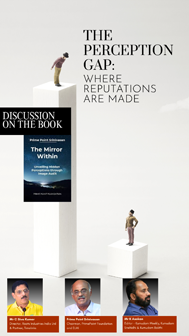
K Vijay Kumar, IPS (Retd), Former DGP, CRPF & Former Senior Advisor, MHA, on collaboration between police and public, and why it is important for police to be apolitical at all times.

I have a very deep connection with SHOs (Station House Officers), because my father was an SHO for a long period of time. He became an inspector the year I joined the IPS. I have heard many SHO stories and let me tell you one to showcase their ingenuity, improvisation, and innovation when things are burning.
Once, a national highway was blocked by a mob. It was getting from bad to worse. There were women and children present. If there had been a lathi charge or firing, there would have been huge casualties. This went on for three or four hours, and the sun was dimming as it was sunset. An SHO arrived and quietly asked one of the constables to get a black nylon rope 2 to 3 cm thick. The rope was stealthily placed on the highway. People who spotted the rope shouted ‘Snake, snake’ and the crowd dispersed in no time. Not one stick was used, nor was a rubber bullet or real bullet fired. But please don’t quote me and get me into trouble; consider this just a story! There are hundreds of such SHO stories.
The topic of future policing is something in which you and I have a direct interest. It is not for the sake of the police themselves but for the sake of society. Some ideas are mine, but many are sourced from other people. There is no life without crime. Tax, death, and crime are certainties. Without police, there is no way you can counter crime. Police are a necessity, whether you love them or not—they are an essential part of society. When I talk about crime, it includes the entire spectrum, from ordinary theft to terror. India is slightly backward in some areas but quite forward in many others. Policing here is much more complex than in a highly modernised country.
Crime and Punishment: Then and Now
In the past, the criminal had to be personally present at the scene of the crime, but today, someone sitting in Colombia can pauperize a man sitting in Cochin or Chintadripet. A terrorist can be recruited online, brainwashed, trained, and sent to Syria or elsewhere without the recruits and their handlers seeing each other. That’s the power of technology. Today, there is something called ganging and banging on the internet. Gangs fight on the internet. What was only a street fight has become a digital fight.
Punishments in those days included tooth for tooth, eye for eye, and blood money as compensation. If the son committed a crime, the father could be punished, even in our old Indian system. If one individual had an aberration, the entire community could be punished. Genghis Khan had a way of punishing his entire section of men if one of them came back dead. He would ask others, “Why did you allow him to die? Why didn’t you all die? You should all have come back alive or dead.” Even Tamil Poet Bharati had written, “If one man in a society did not have food, let’s destroy the world.”
Hard Facts
Let’s look at some hard facts. One: There is no utopia without crime, except perhaps in very, very cold countries like Antarctica, Iceland, or Finland. India ranks 79 out of nearly 200 countries on the crime map. The consolation is that Syria and Afghanistan are behind us. Two: There is an expert opinion from David Bayley who says that between the demand and supply for security, there will always be a gap. The third point is safety and fear. Concerns are a constant in life. In Singapore, 5.5% of people said they are worried about safety. But in Lebanon, 80% said they are always concerned about safety. The fourth point is about motivation.
Jack Katz, a famous criminologist, says the criminal has got excitement and empowerment factors that motivate him to commit the crime, apart from other factors like poverty, compulsion, necessity, opportunity, etc. So, there will never be a dearth or short supply of criminals.
Point number five is the reporting of crime news. There is something alluring, gripping, even cathartic, therapeutic, or medicinal, and it’s nice to read or hear about crime as long as you are not the victim. News gets amplified. In the USA, during the 60s and 70s, suddenly everybody was talking about crime. Everybody felt more unsafe. Then they figured out that was because of the media reporting more on crime. There could be a 1 or 2% increase in the crime rate, but the knowledge, awareness, or impact is now more because of the media. Nobody is blaming the media. They may be doing their job. But the fact is, amplification of crime news makes you feel unsafe.
Finally, to catch the mice, you require cats—I mean police. It is inevitable. I am not perpetuating the concept of policing when I say, ‘Please support the police.’ Max Weber said, “Bureaucrats are excellent fellows. They give you rules, norms, etc. But one negative point about bureaucrats, which includes me, is they self-perpetuate themselves. They don’t want to eliminate themselves. They’ll sponsor themselves.” There is an observation by Umberto Eco. He says a nation requires an enemy to unify and solidify itself. I am not suggesting we require criminals so that society can consolidate. But fear does unite.
Let me also share a positive point about the criminal—a WhatsApp joke. It says the criminal gives jobs to a lot of people—the locks industry, the safes industry, the almirah industry, the locksmiths, grills, gates, compound walls, security guards, CCTV, the courts, judges, and the police. We are all somewhat dependent on the criminal. That’s the lighter side.
The Magic Triangle and the Rainbow
I want to cover three aspects:
- Policing beyond Khaki
- The Magic Triangle
- The Rainbow of Crimes
Now let’s look at the cop. He’s on duty 24×7, fighting everything from pettiness to terrorism. Policing goes beyond the khaki uniform. We face a rainbow of crimes. The “magic triangle” is the way forward for the future. This triangle consists of the Khaki man, Non-khaki persons or smart civilians who contribute their expertise like the IT skills, and Smart Missions that include all sorts of gadgets. In the future, the computer will become more important than the gun. The cop will have to carry both and give them equal importance.
We often focus on the police alone. When I say policing, I don’t mean just the police—I include the jailer, the judge, the prosecutor, and the entire spectrum. We have to make all these roles smarter.
Another sensitive point is that neutral police are the best. This doesn’t mean we don’t have neutral police, but I urge that the police should be made more neutral, like a constitutional authority. Of course, I am treading on very dangerous ground, but I am convinced that this is important for a good and advanced society. It exists in many advanced countries, and we are an advancing country. Now let me elucidate or amplify all these points.
The Complexity of Future Crimes
The crime of the future is going to be more complex because the missions have become smarter. If the man behind the mission is smart, then he maybe a geek. However, we often find that not-so-smart-looking people are behind these missions. My own image profile has been used for cyber theft 40 or 50 times. Some people have lost money, and we could not recover it because of the time delay in making the complaint. Arrests were made in very backward areas of India. When we looked at these individuals, they appeared very miserable and were not formally educated. But such people work so smartly. For smartness now, it’s the mastery of technology, not traditional literacy, that is required.
What happens when a bad man and a smart mission combine is typified by the example of Lazarus, a hacking group in North Korea. They looted the Bangladesh Bank of $1 billion a few years ago, and luckily, because some countries intervened for Bangladesh, most of the money was retrieved. They lost only about $85 to $90 million by chance. The danger now is that the border between one country and another is erased because of communication flows. Therefore, the police and the army will have to work together as part of the national security team.
The Future of Private Security
The army itself is shrinking and is using smarter machines. The police will also see a reduction in numbers. Instead of being a pair of legs or a jack of all trades, the police officer is going to become smarter and more specialised. He should become an expert. We must use the triangle of khaki + non-khaki + the best mission.
One case that comes to my mind is that of Dr. Prakash in Chennai in 2001. He was a doctor who faced 13 years of conviction in a child pornography crime. I was the commissioner then and didn’t have much knowledge of cyber nuances. J.K. Tripathy was my number two. We engaged a civilian in the triangle—Mr. Sriram, a tech person who is now in the US. We could not pay him much. He went into certain places in the digital world and retrieved a lot of details, which became our main evidence. This was the first case of an IT Act conviction in India.
Interestingly, it happened in December 2001. The fast-track court took seven years to deliver the verdict, even with the best of evidence. The point I’m emphasising is that making the police alone smarter is not enough. The courts also must become technology. Collaboration between the public and the police will become more intense and significant in the days to come, much more than what it is today.
Deloitte conducted a study about public spaces—like the street and private public spaces, that have their own security guards and are not completely dependent on the civil police. They depend on their own guards. Similarly, shopping malls and many gated communities have their own systems, and we all submit to their SOPs and protocols without question. Deloitte says that private security will outgun, out-equip, and outsmart even the police, which is a fact.
Whisky and Geese: A Cocktail Combo
When I think about geeks, I am reminded of geese. Interestingly, there’s a story of Ballantine’s whisky and the security measures taken to guard the stocks that dates back to 1959. Six white geese were deployed because security guards found that using Alsatians alongside guards was both costly and not entirely reliable. As a creative alternative, they engaged geese.
Historically, geese have played a vital role in security. For instance, in 390 BC, Rome was reportedly saved by geese. Their cackling alerted the sleeping Roman soldiers to an advancing enemy, allowing them to respond in time. However, geese seem to have fallen on hard times recently. At Amsterdam Airport, pigs were employed to chase away geese. While pigs are often thought of as smelly, they possess highly sensitive olfactory senses, making them excellent for certain tasks.
A few years ago, some airports experimented with pigs for security, but due to religious sensitivities, this practice was quietly discontinued. Currently, in Israel, pigs are being tested for sensory tasks. These animals, along with others, have been integral to organic support systems for policing and security.
Black Cats to Black Rats
In Mozambique and Cambodia, pouch rats from Africa have been used for demining operations. These rats, weighing about a kilogram each and resembling large bandicoots, are remarkably effective. In just one hour, they can thoroughly scan an area of 200 square meters with 90% reliability. In contrast, dogs, though valuable, need to rest after about 20 minutes of work. It’s hard to say if even our explosive experts could match the rats’ dependability.
Pigs, dogs, and rats have consistently supported us in various roles. During the 26/11 Mumbai attacks, the deployment of camera-mounted dogs might have improved the response efforts. While this is hindsight, it reflects insights from official NSG records. I am not being critical of the responders; these observations also stem from my own experiences in remote monitoring and learning. Perhaps the era of black cats is over, and black rats will take centre stage in security innovations!
Flying Policemen
Micro-robots and small swarm drones, at the touch of a button, can seamlessly coordinate with each other. This is the power of science and technology. Arthur C. Clarke once remarked that there is something profound and mystifying about technology, but once it becomes familiar, the mystery fades. It feels natural and normal, and we no longer marvel at its brilliance—we simply take it for granted.
In 1968, an author envisioned face reading, face recognition, and driverless cars. At the time, people laughed at such ideas, but today they are a reality. Looking ahead, we might even witness flying policemen—officers equipped with advanced sensors and AI-powered goggles. These devices could analyse a person walking down the street and instantly provide data about their past behaviours.
The Crime Rainbow
Crimes can be categorised using a “rainbow code,” inspired by the colours of VIBGYOR: V for Violent Crimes (Physical harm or threats of harm, such as murder, assault, and kidnapping); I for Invisible Crimes (crimes that are difficult to detect, such as cybercrimes, financial fraud, and hacking); B for Blue-Collar Crimes (Crimes committed by individuals in their occupational roles, such as theft, workplace fraud); G for Green Crimes (Crimes against the environment); Y for Yellow Crimes (Crimes involving moral or ethical violations, such as pornography, trafficking, or illegal trade of body parts); O for Orange Crimes (Specific crimes linked to public offenses like dispute between a husband-wife) and R for Red Crimes (Crimes involving severe physical harm or bloodshed).
In Afghanistan, during US occupation, bomb explosions accounted for two-thirds of casualties among the injured. Recognising this, Robert Gates, the brilliant U.S. Secretary of Defence, implemented two critical measures. First, he introduced a large fleet of Mine-Resistant Ambush-Protected (MRAP) vehicles, which provided superior protection against explosives. Second, he overhauled medical practices at the Bethsheba Hospital, shifting its focus to trauma care specifically designed for explosion-related injuries. He replaced the archaic head doctor, who adhered to outdated medical protocols, with professionals trained to address modern battlefield challenges.
Gates also leveraged drones as a vital part of the strategy. Drones were deployed to scout routes in advance of MRAP convoys, identifying any signs of recent digging, suspicious activity, or potential ambushes. During operations, drones monitored movements along the sidelines of the convoy route. These proactive measures dramatically reduced casualties, showcasing the transformative impact of technology.
Poaching the Poachers
On a lighter note—but also with serious reflection—I often think how drones could have changed the outcome of the Veerappan manhunt in the early 1990s. During one operation in a place called Boda Balai, Walter Devaram and his team were relentlessly searching for Veerappan, who was hiding just a few hundred meters away. Despite their efforts, they couldn’t track him down.
We couldn’t rely on dogs, either. Our Doberman Pinschers, weighing between 28 and 35 kilograms, became cumbersome for their handlers in the rugged terrain. Unlike agile street dogs, they weren’t suited for such operations. Interestingly, the poachers themselves used jungle dogs, which were swift and well-adapted to the environment. We attempted to poach some of these jungle dogs from the poachers and train them, but they grew lazy under government care. With access to generous rations, including beef, they became more interested in feasting than tracking. That’s a humorous anecdote, of course, but it underscores the challenges we faced and how technology, like drones, could have made all the difference.
Making Courts Smarter
India’s judicial system is grappling with an overwhelming backlog of more than three crore cases across the country, including over 80,000 pending cases in the Supreme Court. There are also six lakh prisoners in the country, of whom nearly 66–67% are undertrials. These individuals have not been convicted, yet they remain in custody at the government’s expense. Some may even be innocent. This raises critical questions: Why should we house and feed so many undertrials as ‘government guests’? And why should justice take so long?
To address these challenges and reduce the time courts spend on procedural matters, technology is stepping in. Courts are now employing drones as part of a ‘drone commission’ initiative. For example, drones can survey disputed sites, capture accurate footage, and provide clear evidence to determine land ownership. This eliminates the need for lengthy on-site visits or conflicting testimonies.
Beyond judicial applications, drones are proving their versatility. They can deliver life-saving medicines to patients in remote areas or supply drugs for de-addiction programs. However, the same technology could also be misused, such as for delivering contraband to drug addicts. This highlights a fundamental truth about technology: it is inherently neutral. Its value lies in its application. Technology is magical and mysterious, but ultimately, it’s a tool. Those who embrace it and harness its potential effectively are the true winners.
Left Far Behind
There are many interesting examples in history of how the police are lagging behind the culprits, but one from 1912 in Paris stands out. A bank robbery took place where the looters arrived in a car, having shot their driver beforehand. They fled in the same car, leaving the police scrambling to chase them—on horseback and bicycles, as the police force did not yet have cars.
I also have a personal story to share. During my tenure in Tamil Nadu, we were tasked with protecting the then Chief Minister, Jayalalithaa, who faced significant threats from the LTTE. At the time, we lacked advanced firearms for the security team. My vision was to create a protection unit akin to the Special Protection Group (SPG) I had been part of during my time in the Prime Minister’s security detail.
However, bureaucratic delays in approvals and sanctions left us seeking alternatives. That’s when I found a practical solution. Our armoury contained a substantial number of AK-47 rifles—seized weapons originally supplied to the LTTE by our own intelligence agencies years earlier. It was ironic that these very weapons, which had been intended to empower the LTTE, were now being repurposed to defend against a potential LTTE attack. It was a classic case of the ‘chickens coming home to roost,’ but we turned that irony into an advantage, using the resources at hand.
To sum up, collaboration between the police and the public is highly beneficial. The police should be under proper control and supervision, but they must remain apolitical. Instead of weaponising the police, crimes become politicised and weaponised. The Supreme Court is already overburdened, with even routine bail applications reaching its doors. Bail, which involves a person’s liberty, is indeed of the utmost importance. However, the Supreme Court also needs to deliver numerous constitutional verdicts, culling out the finest nuances.
On one hand, we want the SHO to exercise power, authority, and neutrality, and we empower him with a gun. On the other hand, we don’t trust his testimony in court, treating him like a suspect. How can this be? How can we treat a cop like a criminal?
My question is: Are we serious about striving for a truly ‘good cop,’ or do we accept the reality of having a mix of the good, the bad, and the ugly cop? I leave this for you to ponder upon.